Onions make you cry because cutting them triggers a two-enzyme cascade that produces syn-propanethial-S-oxide, a volatile sulfur compound that vaporizes into the air and lands on your cornea. Your eye’s sensory nerves detect it, interpret it as a chemical burn, and flood the eye with tears to flush it away. That is the whole story in one sentence. The rest is the fascinating chemistry of how it happens, and which kitchen tricks actually work.
The One Molecule Behind the Tears
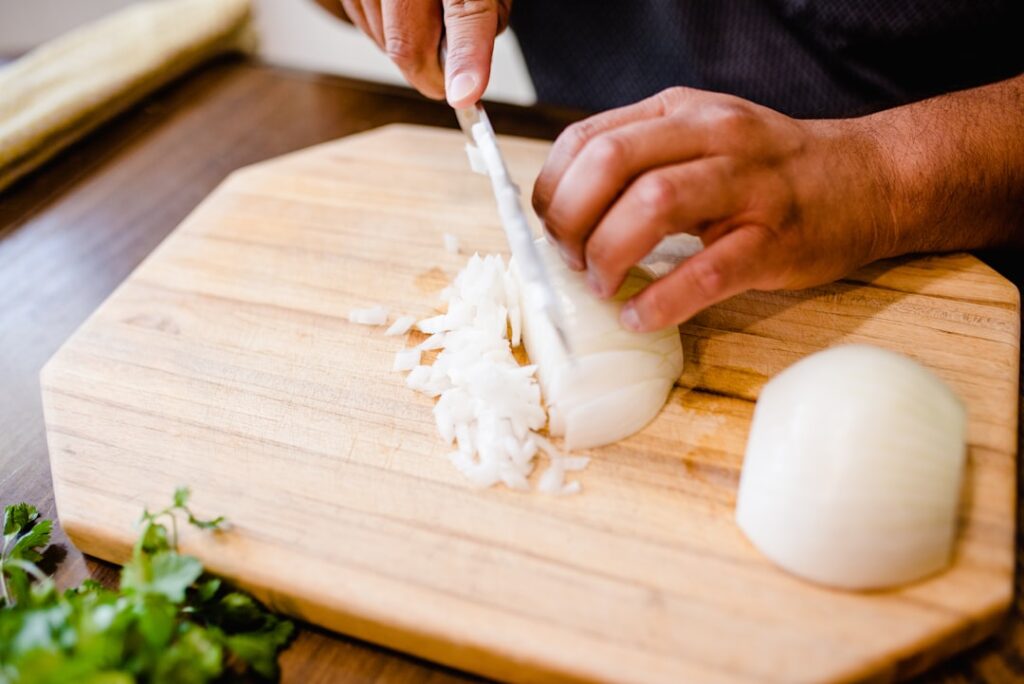
The molecule responsible is called syn-propanethial-S-oxide, also known as the lachrymatory factor (LF). The name literally comes from the ancient Greek word for “tear.” It is a volatile liquid, meaning it evaporates easily at room temperature, and it is this vapor that travels from your cutting board to your eyes.
Here is the cascade that produces it. Inside each onion cell, two components are kept in separate compartments, like reagents waiting on a shelf. One compartment holds an enzyme called alliinase (also spelled allinase). The other holds its substrate: a family of sulfur compounds called alk(en)yl cysteine S-oxides, or ACSOs. The specific ACSO that matters most here is trans-S-1-propenyl-L-cysteine sulfoxide, mercifully abbreviated PRENCSO.
When your knife ruptures the cell walls, alliinase and PRENCSO mix. Alliinase cleaves PRENCSO and releases (E)-1-propenesulfenic acid, a short-lived intermediate. Then a second enzyme, lachrymatory factor synthase (LFS), converts that sulfenic acid into syn-propanethial-S-oxide. This second enzyme was only discovered in 2002 by Japanese researchers, which means that for decades, scientists believed the sulfenic acid rearranged itself spontaneously. It does not. LFS is required, and when scientists silenced the LFS gene, they produced a genuinely tearless onion.
Why That Specific Compound Reaches Your Eye
Plenty of sulfur compounds are released when you cut an onion, but most are not volatile enough to travel through the air. Syn-propanethial-S-oxide is different. It is a low-molecular-weight thiocarbonyl S-oxide that evaporates readily at room temperature, so it lifts off the cut surface of the onion and drifts upward in a invisible plume.
When the vapor reaches your eye, it dissolves in the thin film of water covering your cornea. There it forms traces of sulfuric acid, which is why it stings rather than just tickles. The cornea is densely packed with sensory fibers of the ciliary nerve, a branch of the trigeminal nerve that carries pain, touch, and temperature signals from your face. These nerve endings detect the compound in proportion to its concentration, and the brain interprets the signal as a burning sensation.
That signal triggers a reflex arc. The autonomic nervous system fires back a command to the lacrimal glands: produce tears, now. The tears are not an emotional response. They are a defensive flush, your body’s attempt to wash the irritant away. According to the American Chemical Society, LF formation peaks roughly 30 seconds after you damage the tissue and runs its full chemical course over about five minutes. So the worst moment is not the first cut. It is the half-minute mark, when the vapor concentration hits its stride.
Why Your Knife Technique Matters
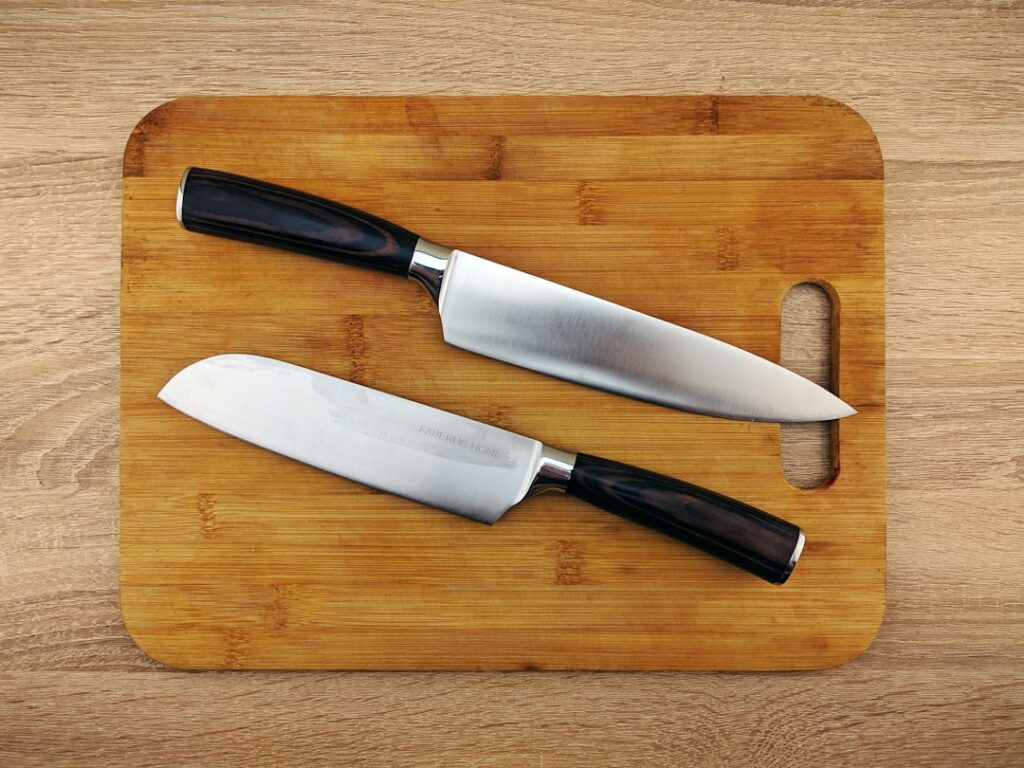
A sharp knife produces fewer tears than a dull one, and the reason is purely mechanical. A sharp blade slices cleanly through onion tissue, rupturing a relatively small number of cells. A dull blade does not so much cut as crush, smashing cell walls open over a wider area and releasing significantly more alliinase and ACSO into the same airspace. More ruptured cells means more substrate mixing, more enzymatic conversion, and more syn-propanethial-S-oxide drifting toward your face.
This is not a marginal effect. The difference between a freshly honed edge and a dull blade can be felt within seconds. As the chefs and food writers at Bon Appetit note, a dull knife “smashes rather than slices,” doing more damage to the cells and releasing more of the tear-inducing compound. The sharper the knife, the fewer cells you breach, and the less LF you generate per cut.
There is a trade-off worth knowing about. The same reaction that produces the lachrymatory factor also produces thiosulfinates, the compounds responsible for onion flavor and pungency. As America’s Test Kitchen’s testing found, techniques that reduce LF production also tend to reduce flavor. So if you are making a dish where the onion is the star, you may want to accept some tearing in exchange for a more flavorful result.
Does Chilling the Onion Actually Work?
Yes, chilling works, and the mechanism is twofold. First, the entire LF cascade is enzyme-driven, and enzymes slow down at lower temperatures. Alliinase and LFS both become less active when cold, so they convert less PRENCSO into the lachrymatory factor in the same window of time. Second, volatility is a function of temperature. A chilled onion releases vapor more slowly because the syn-propanethial-S-oxide molecules have less thermal energy and are less eager to leave the liquid phase and enter the air.
The practical approach: refrigerate the onion for about 30 minutes before cutting. You can also submerge it in a bowl of ice water for 15 to 20 minutes, which combines the chilling effect with a second mechanism. Water dissolves the volatile compound at the cut surface before it can evaporate, acting as a chemical trap. The downside, as some chefs caution, is that prolonged soaking can mellow the onion’s flavor. For a mirepoix base that is fine. For a raw onion salad where you want bite, skip the soak.
One thing to avoid: the freezer. Freezing the onion risks rupturing cells through ice crystal formation, which would release even more enzyme and substrate when thawed. The refrigerator is cold enough to slow the enzymes without damaging the tissue.
What About Cutting Under Water?
Cutting an onion under running water or in a bowl of water works on a simple physical principle. Syn-propanethial-S-oxide is volatile in air but soluble in water. When you cut underwater, the compound dissolves into the surrounding water before it can vaporize and reach your eyes. It is the same logic as keeping a damp towel or a bowl of water near your cutting board: water acts as a sink for the volatile molecules.
The catch is practicality. Cutting an onion submerged in a bowl is awkward, and the onion becomes slippery and harder to handle safely. Running water works better but wastes water and can wash away flavor compounds you might want to keep. Most home cooks find that chilling plus a sharp knife gets them 80% of the benefit with none of the hassle.
| Technique | Mechanism | Effectiveness | Trade-off |
|---|---|---|---|
| Sharp knife | Fewer cells ruptured, less enzyme released | Moderate | None |
| Chilling (fridge, 30 min) | Slows enzyme activity, reduces vapor pressure | Good | Minimal |
| Ice water soak (15-20 min) | Slows enzymes plus dissolves vapor at surface | Very good | May mellow flavor |
| Cutting under water | Dissolves LF before it vaporizes | Good | Awkward, slippery, washes flavor |
| Microwaving briefly | Heat denatures alliinase and LFS irreversibly | Excellent | Cooks the onion, changes texture |
What About Sweet Onions and Shallots?
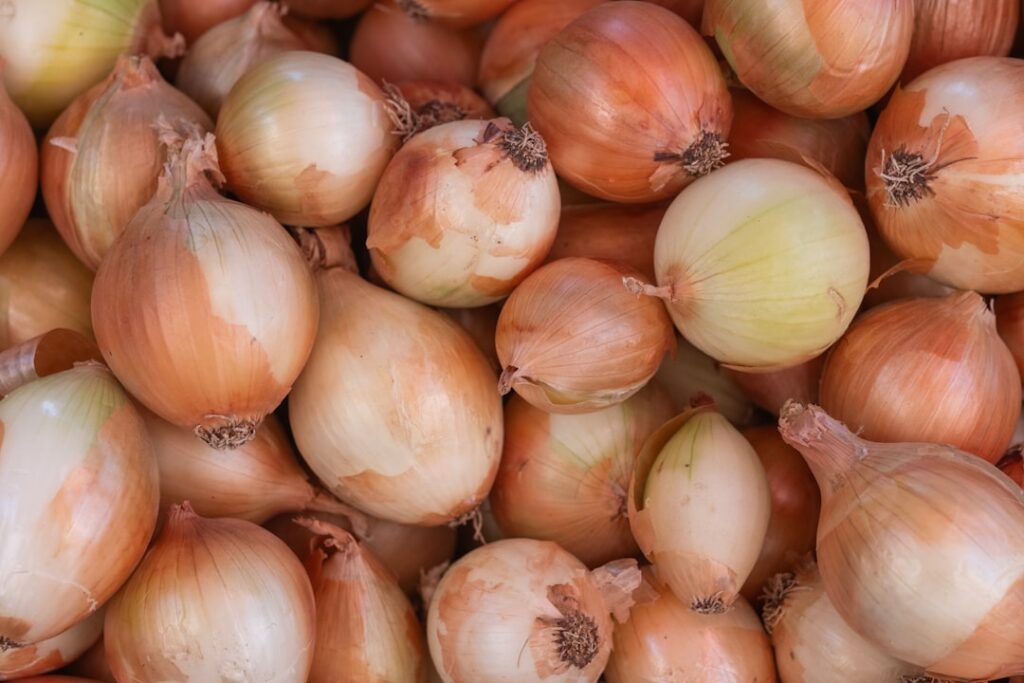
Sweet onion varieties like Vidalia and Walla Walla produce noticeably fewer tears, and the reason comes down to soil chemistry. Onions store sulfur from the soil as ACSO compounds. More sulfur in the soil means more ACSO in the bulb, which means more substrate for alliinase and more syn-propanethial-S-oxide when you cut. Vidalia onions are grown in the low-sulfur sandy soils of Georgia, where rain and soil porosity leach sulfur away from the plant roots. The result is an onion with less of the precursor compound, and therefore less tear-inducing vapor.
Here is the detail that surprises most people: sweetness in onions is not really about sugar content. It is about the absence of pungency. When alliinase cleaves PRENCSO, it produces not only the lachrymatory factor but also pyruvic acid as a by-product. Pyruvic acid is stable and easy to measure, and it correlates directly with both pungency and tear-inducing capacity. Onions with high pyruvic acid taste hot and make you cry. Onions with low pyruvic acid taste sweet, even though their actual sugar content may be similar.
This is why Vidalia onions can be certified as “sweet” or “extra sweet” based on a laboratory pyruvic acid test developed at the University of Georgia. It is also why Sunions, the commercially available “tearless” onion, were bred by repeatedly crossing varieties with naturally low pyruvate levels rather than through genetic modification.
Shallots, by contrast, are not your friend if you are trying to avoid tears. They belong to the same Allium genus and use the same alliinase-LFS cascade, but they tend to have a higher concentration of sulfur compounds per gram of tissue than common bulb onions. The same goes for garlic, though garlic takes a different chemical branch after the alliinase step and produces allicin instead of the lachrymatory factor. That is why garlic does not make you cry even though it uses the same starting enzyme. The same compound in chili peppers that makes your mouth burn, capsaicin, works through an entirely different nerve pathway. But the body’s response, flooding the affected area with fluid to wash away the irritant, is essentially the same defensive reflex whether the trigger hits your tongue or your eye.
At Gastronomy Facts And Articles, we find it endlessly fascinating that the plant kingdom evolved two completely unrelated chemical weapons, sulfur-based volatiles in alliums and capsaicin in peppers, that both end up triggering the same mammalian defense mechanism. The onion’s defense was designed for underground pests. We just happen to get caught in the crossfire every time we make dinner.
Read Next: More Kitchen Chemistry
If you enjoyed digging into the molecular cascade behind onion tears, the chemistry of capsaicin is a natural companion read. Chili peppers evolved a completely different irritant molecule, but it exploits the same trick: hijacking your nerve endings to trigger a protective response. Understanding why capsaicin binds to heat receptors in your mouth, and why water does nothing to stop the burn, rounds out the picture of how plants weaponize chemistry against the animals that eat them.
Have a food science question we have not answered yet? Our team at Gastronomy Facts And Articles is always looking for new topics to break down. The kitchen is full of chemistry hiding in plain sight, and every folk remedy has a mechanism underneath it worth understanding.
Frequently Asked Questions
What chemical in onions makes you cry?
Syn-propanethial-S-oxide, also called the lachrymatory factor. It is produced when the enzyme alliinase mixes with sulfur compounds during cutting, and a second enzyme called lachrymatory factor synthase converts the intermediate into this volatile compound that reaches your eyes.
Does putting a spoon in your mouth stop onion tears?
No. There is no scientific mechanism by which holding a spoon, breathing through your mouth, or chewing gum would prevent the volatile compound from reaching your eyes. These are folk remedies without a chemical basis.
Why do sweet onions make you cry less?
Sweet onions like Vidalia are grown in low-sulfur soils, which means they contain less of the precursor compound that alliinase converts into the lachrymatory factor. Their low pyruvic acid levels correlate directly with reduced tearing and pungency.
Does chilling an onion before cutting really help?
Yes. Chilling slows down the enzymes responsible for producing syn-propanethial-S-oxide and reduces the compound’s volatility, so less vapor reaches your eyes. About 30 minutes in the refrigerator is sufficient.
Why does garlic not make you cry like onions do?
Garlic uses the same starting enzyme, alliinase, but its sulfenic acid intermediate takes a different chemical branch and produces allicin instead of syn-propanethial-S-oxide. Allicin is not volatile enough to reach and irritate your eyes.
0 Comments