Gastronomy Life
  • Privacy Policy
  • Terms And Conditions
  • About
  • Contact Us
  • Shop
  • Cart
  • Checkout
  • My account

admin

Food Facts

When Ketchup Was Sold as Medicine, Not a Condiment

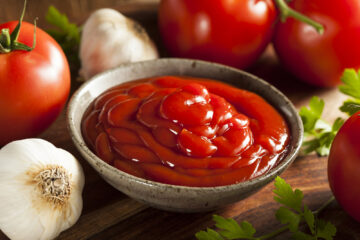
Grab a bottle of ketchup from the fridge today, and it’s hard to think of it as anything but a burger topping. But in the 1830s, Americans weren’t squeezing ketchup onto fries — they were swallowing it in pill form, on a doctor’s advice, to cure everything from indigestion to Read more
By admin, 3 weeksAugust 27, 2026 ago
Food Facts

Carrots Weren’t Always Orange — Here’s the Surprisingly Political History of Their Color

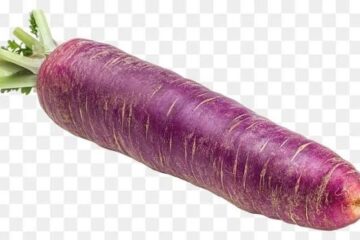
Everyone knows carrots are orange — but they weren’t always. For most of their cultivated history, carrots were purple, yellow, and white. The Dutch bred the orange variety we know today, and legend says it was a tribute to William of Orange. The truth, it turns out, is far less romantic — and far more interesting.

By admin, 3 weeksAugust 26, 2026 ago
Food Facts

The “Forbidden” Fruit That’s Legally a Vegetable: The Strange Story of the Tomato

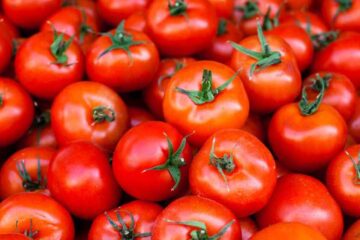
Walk into any kitchen and ask someone whether a tomato is a fruit or a vegetable, and you’ll probably get a confident, immediate answer. The trouble is, depending on who’s answering, you’ll get two completely different — and equally “correct” — responses. A botanist will tell you, without hesitation, that Read more

By admin, 3 weeksAugust 25, 2026 ago
Broken chocolate bar pieces scattered on a dark stone surface — flat-lay food photography
Food Facts

Why Does Chocolate Turn White? It’s Not Mold

That chalky white film on a chocolate bar usually means bloom, not spoilage. The short version is that chocolate can turn white in two different ways: fat bloom, when cocoa butter moves and recrystallizes, or sugar bloom, when moisture dissolves surface sugar and it dries back into crystals. If you Read more

By admin, 4 weeksAugust 23, 2026 ago
Person inspecting jars of fermented vegetables including sauerkraut on a wooden table
Food Facts

Raw Sauerkraut vs Shelf-Stable: What’s the Difference?

Raw sauerkraut is refrigerated because it still contains live lactic acid bacteria, while shelf-stable sauerkraut has usually been pasteurized hot enough to stop fermentation and kill those microbes. In plain English, both jars may have started as fermented cabbage, but only one is still biologically alive when you pick it Read more

By admin, 4 weeksAugust 22, 2026 ago
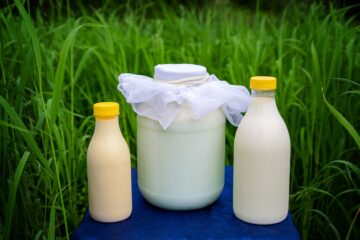
Fermented dairy kefir jars and milk bottles outdoors, illustrating the kefir vs yogurt comparison
Uncategorized

Kefir vs Yogurt: 30 Strains vs 2, Explained

Kefir and yogurt both ferment milk with lactic acid bacteria, but kefir’s grain-based culture of 30-plus bacterial and yeast strains creates a fizzier, thinner, more microbially diverse drink than yogurt’s two-strain fermentation.

By admin, 4 weeksAugust 22, 2026 ago
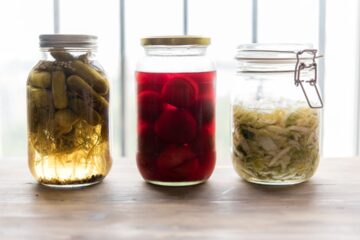
Three glass jars of fermented foods including pickles, pickled beets, and sauerkraut on a wooden surface
Food Facts

Fermented Foods for Gut Health: What Really Works

Only fermented foods that are both unpasteurized and still biologically active when you eat them can deliver live microbes to the intestine. In plain English, fermentation alone is not enough. A food can be fermented in its history and completely microbe-dead on the spoon, which is why refrigerated live-culture yogurt, Read more

By admin, 4 weeksAugust 21, 2026 ago
Close-up macro photograph of white crystalline powder resembling MSG or sodium salt crystals
Food Facts

Does MSG Actually Cause Headaches? Here’s the Evidence

Double-blind studies have failed to reproducibly link MSG to headaches. That is the short answer. Monosodium glutamate is simply the sodium salt of glutamic acid, an amino acid already present in foods like tomatoes, mushrooms, and parmesan, and the famous fear around it grew far faster than the evidence ever Read more

By admin, 4 weeksAugust 21, 2026 ago
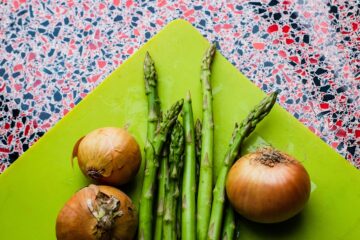
Flat-lay of asparagus spears and whole onion bulbs on a green cutting board — key prebiotic foods rich in inulin and FOS
Food Facts

Prebiotic Foods List: Sorted by the Fiber That Feeds Your Gut

Prebiotic is not a wellness magic word. A food really qualifies when it contains a carbohydrate that your small intestine does not fully digest, but your gut microbes can ferment lower down in the colon. In plain English, prebiotics are food for microbes, not microbes themselves. That is why yogurt Read more

By admin, 4 weeksAugust 20, 2026 ago
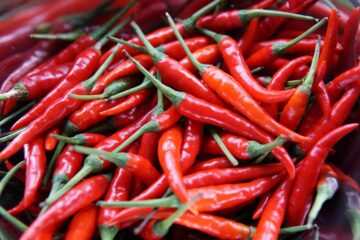
A vivid pile of fresh red chili peppers, illustrating the capsaicin-packed ingredients behind the science of spicy food
Food Facts

What Makes Chili Peppers Hot? It’s Not What You Think

Capsaicin makes food feel hot because it binds to TRPV1 receptors on your tongue, the same heat-sensitive nerve receptors that normally respond to actual high temperatures. In plain English, your brain is being tricked into reading chemistry as heat. Your mouth feels on fire even when the pepper is not Read more

By admin, 1 monthAugust 19, 2026 ago

Posts pagination

1 2 Next
  • Privacy Policy
  • Terms And Conditions
  • About
  • Contact Us
  • Shop
  • Cart
  • Checkout
  • My account
Hestia | Developed by ThemeIsle