Prebiotic is not a wellness magic word. A food really qualifies when it contains a carbohydrate that your small intestine does not fully digest, but your gut microbes can ferment lower down in the colon. In plain English, prebiotics are food for microbes, not microbes themselves. That is why yogurt can be either side of the story: the live cultures are the probiotic half, while any added inulin, FOS, or GOS are the prebiotic half.
That distinction matters because people often use probiotic and prebiotic as if they were interchangeable. They are complements, not twins. If you want the bacteria side of the equation, read our probiotic foods explainer through the lens of yogurt and live cultures. This article is the fiber side: which everyday foods actually feed those microbes once they get there.
What Actually Makes a Food Prebiotic
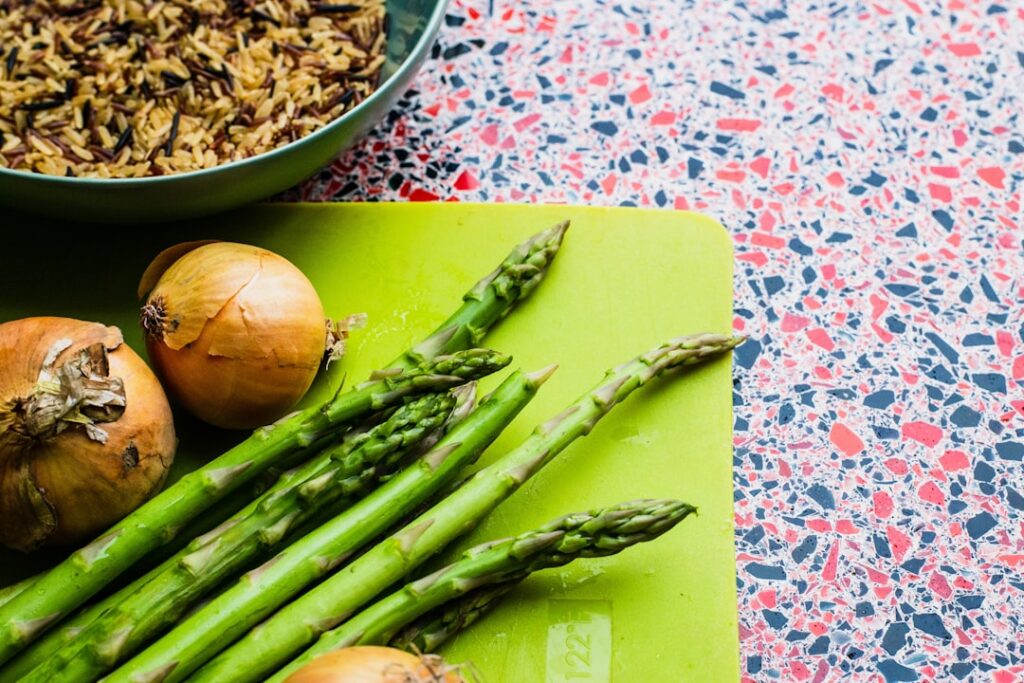
A food counts as prebiotic when it delivers certain fermentable carbohydrates to the colon, where microbes can use them selectively. The four fibers readers see most often on labels and in gut-health articles are inulin, FOS, GOS, and resistant starch. They are all nondigestible, but they are not the same molecule and they do not come from the same foods.
Inulin is a longer chain of fructose units stored by many plants, especially roots and bulbs. FOS, short for fructooligosaccharides, is the shorter-chain version of that same general fructan family. GOS, short for galactooligosaccharides, is built from galactose-containing chains and shows up most naturally in legumes. Resistant starch is different again: it is starch that escapes digestion in the small intestine and reaches the colon intact enough to act like fermentable fiber. Reviews of prebiotic fiber consistently group inulin, FOS, GOS, and resistant starch among the best-known dietary prebiotics, while Harvard’s Nutrition Source specifically lists inulin-type fibers and resistant starch as soluble fermentable fibers that can act as prebiotics.
Here is the part many readers do not expect: a food can be high in total fiber without being especially rich in one of these named prebiotic fibers, and a food can contain a prebiotic fiber without carrying a flashy front-of-pack claim. Garlic, onions, beans, oats, cooled potatoes, and less-ripe bananas are often doing more real prebiotic work than many products marketed for gut health. If you like mechanism-first food myth busting, our food myths roundup uses the same verdict-first style on a wider set of kitchen claims.
The Real Prebiotic Foods List, Sorted by Fiber Type
The useful way to sort prebiotic foods is by the fiber they actually contain. Gram amounts can be tricky because standard nutrition panels usually report total dietary fiber, not just inulin or just resistant starch, so the table below separates three different things: named prebiotic fiber when published research gives a range, total fiber when USDA data are the clearest everyday number, and a plain-English note about what the food is mainly contributing.
| Fiber type | Everyday foods | Concrete amount | What the number means |
|---|---|---|---|
| Inulin | Chicory root, Jerusalem artichoke, garlic, onions, asparagus | Asparagus contains about 2 to 3 g inulin per 100 g fresh weight; chicory root and Jerusalem artichoke are much richer but amounts vary by variety and handling | Inulin is the longer fructan chain. Think roots, bulbs, and tubers rather than milk or meat. |
| FOS | Onions, garlic, chicory, asparagus, bananas, artichokes | Research consistently identifies these foods as natural FOS sources, but everyday labels rarely give a stand-alone FOS value | FOS is the short-chain cousin of inulin, so the food list overlaps heavily with inulin-rich plants. |
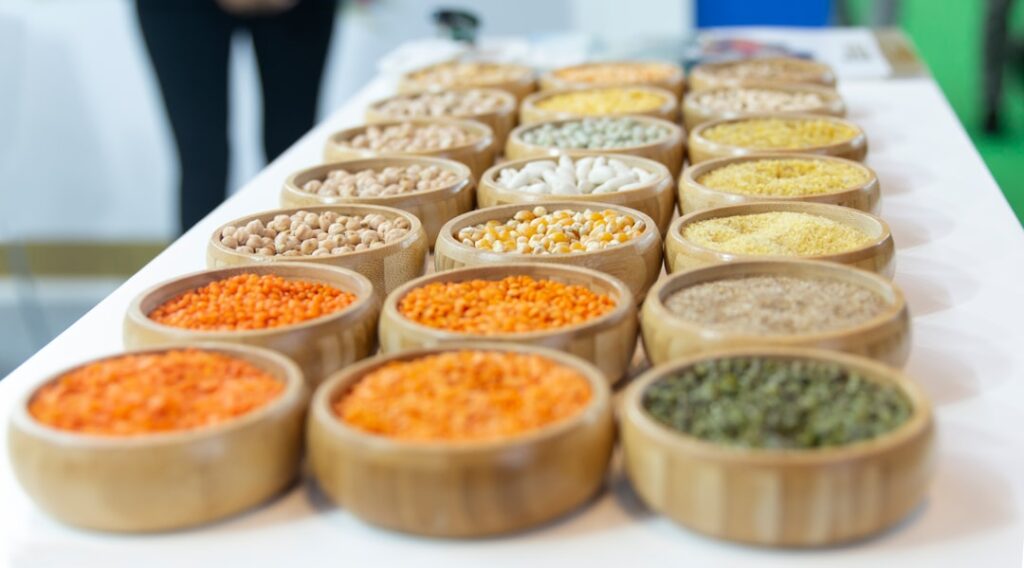
| GOS | Chickpeas, lentils, black beans, kidney beans, soybeans, cashews, pistachios | A 100 g serving of common beans provides about 3.9 to 5.2 g raffinose-family oligosaccharides, the main natural GOS-style prebiotic fraction in legumes | Legumes are the big everyday GOS story. They also bring total fiber and, in many cases, some resistant starch. |
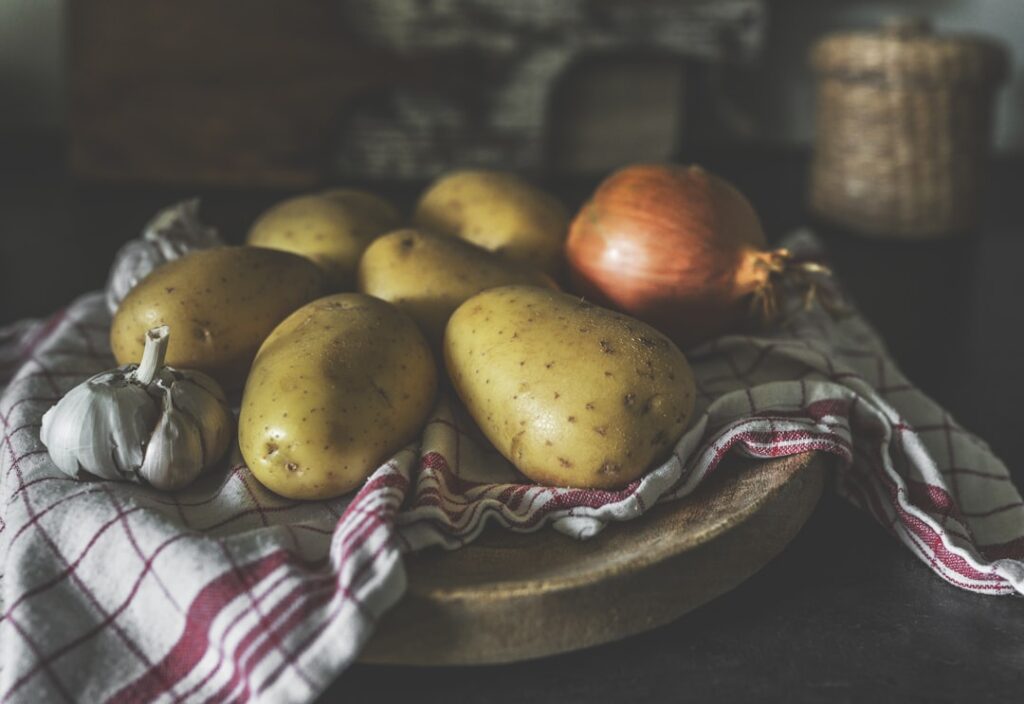
| Resistant starch | Cooked and cooled potatoes, cooked and cooled rice or pasta, oats, barley, beans, chickpeas, green bananas or plantains | Common beans provide about 2.6 to 3.9 g resistant starch per 100 g in one published analysis; foods like potatoes and rice can gain more resistant starch after cooking then cooling | This is starch that slips past small-intestine digestion. Cooling helps some starch molecules recrystallize into a harder-to-digest form. |
| Total fiber context | Lentils, chickpeas, oats, onions, asparagus | USDA FoodData Central reports total dietary fiber per 100 g as roughly 7.9 g for cooked lentils, 7.6 g for cooked chickpeas, 10.1 g for dry oats, 1.7 g for raw onion, and 2.1 g for raw asparagus | These are not pure prebiotic-fiber numbers. They show the everyday fiber package that often carries the prebiotic fraction along with it. |
Verdict: onions and garlic absolutely count. They are two of the clearest everyday fructan foods, especially for inulin and FOS. That is also why people who follow low-FODMAP eating plans are often told to watch them closely: the same fermentable carbohydrates that can feed gut microbes can also trigger bloating in sensitive people.
Verdict: beans and lentils are the practical workhorses. They bring GOS, total fiber, and often some resistant starch in one package. If you have ever wondered why legumes show up in both gut-health praise and digestive complaints, that is the mechanism. Their fermentable carbohydrate load is real, which is great for microbial feeding but can be a lot if your gut is not used to it.
Verdict: cooled starches count too. Resistant starch is the least intuitive item on the list because it is not a special exotic ingredient. It is regular starch that changes structure or remains physically protected enough to resist digestion. Think of it less like a separate additive and more like starch wearing a disguise your small intestine cannot fully unwrap.
How Much Do You Need Per Day?
There is no single universally used daily target for prebiotic foods the way there is for total fiber, so the practical answer is to build a pattern rather than chase one magic gram number. Research reviews note that inulin-type fructans are generally well tolerated up to around 20 grams per day, but many people feel digestive effects long before that if they increase intake too quickly.
For most curious eaters, the safer real-world move is to think in layers. Add one fructan-rich vegetable such as onion, garlic, or asparagus, one legume serving a few times per week for GOS, and one resistant-starch source such as beans, oats, or cooked-and-cooled potatoes. That approach supports overall fiber intake without turning dinner into a chemistry experiment your colon was not ready for.
Here is the huh, did not know that moment: the best prebiotic pattern often looks boring. It is not usually a designer yogurt with a halo on the label. It is onions in the pan, lentils in the soup, oats at breakfast, and leftover potatoes in a salad. Gastronomy Facts And Articles focuses on exactly this kind of label-versus-mechanism gap because the kitchen answer is usually more interesting than the package claim.
Does Cooking Destroy Prebiotics?
Cooking does not simply erase all prebiotics, but heat and water can change how much of a given fiber remains and where it ends up. Fructans and GOS are water soluble, so boiling can leach some into the cooking liquid, while resistant starch can either decrease with hot fresh cooking or increase after cooling, depending on the food.
That is why the answer is: it depends on the fiber. Inulin and FOS in vegetables like onion, garlic, and asparagus are still part of the food story after normal cooking, but they are not indestructible. Legume oligosaccharides can shift during soaking, boiling, cooling, and reheating. Resistant starch is the most shape-shifting of the group, because retrogradation, the process where cooked starch chains realign as they cool, can raise the resistant starch fraction in foods like potatoes, rice, pasta, and beans.
Plain-English version: soup keeps more water-soluble material in the bowl, while boiling and draining can wash some away. Meanwhile, yesterday’s potato salad may feed microbes differently than a steaming baked potato fresh from the oven. That is not marketing fluff. It is starch chemistry.
Keep Reading
Prebiotic foods are the feeding side of gut health. Probiotic foods are the live-microbe side. Put together, they make far more sense than either buzzword alone. For the complementary half of the story, start with our probiotic foods article on yogurt, live cultures, and what they actually do. If fermented foods fascinate you, our natto breakdown shows how one breakfast staple turns microbial metabolism into an almost cartoonishly sticky texture.
Send us the food question you cannot stop thinking about, and we will break down the mechanism behind it. Gastronomy Facts And Articles is always looking for the next ingredient claim, kitchen myth, or label promise worth testing against the actual chemistry. Contact us at contact@gastronomy.life if there is a gut-health question you want us to unpack next.
Frequently Asked Questions
What is the difference between prebiotic and probiotic foods?
Prebiotic foods contain fermentable carbohydrates that feed gut microbes, while probiotic foods contain live microbes themselves. One is the fuel, the other is the organism.
Are onions and garlic really prebiotic foods?
Yes. Onions and garlic are among the best-known everyday sources of fructans, including inulin and fructooligosaccharides.
Do beans count as prebiotic foods?
Yes. Beans and other legumes naturally contain galactooligosaccharide-related compounds and often some resistant starch, which is why they are common examples of prebiotic foods.
Does cooling potatoes make them more prebiotic?
Cooling cooked potatoes can increase their resistant starch content because some starch chains realign as they cool into a form that resists digestion in the small intestine.
How much prebiotic fiber should you eat per day?
There is no single standard target used for all prebiotic fibers. A practical approach is to increase prebiotic-rich foods gradually as part of meeting your overall fiber needs.
0 Comments